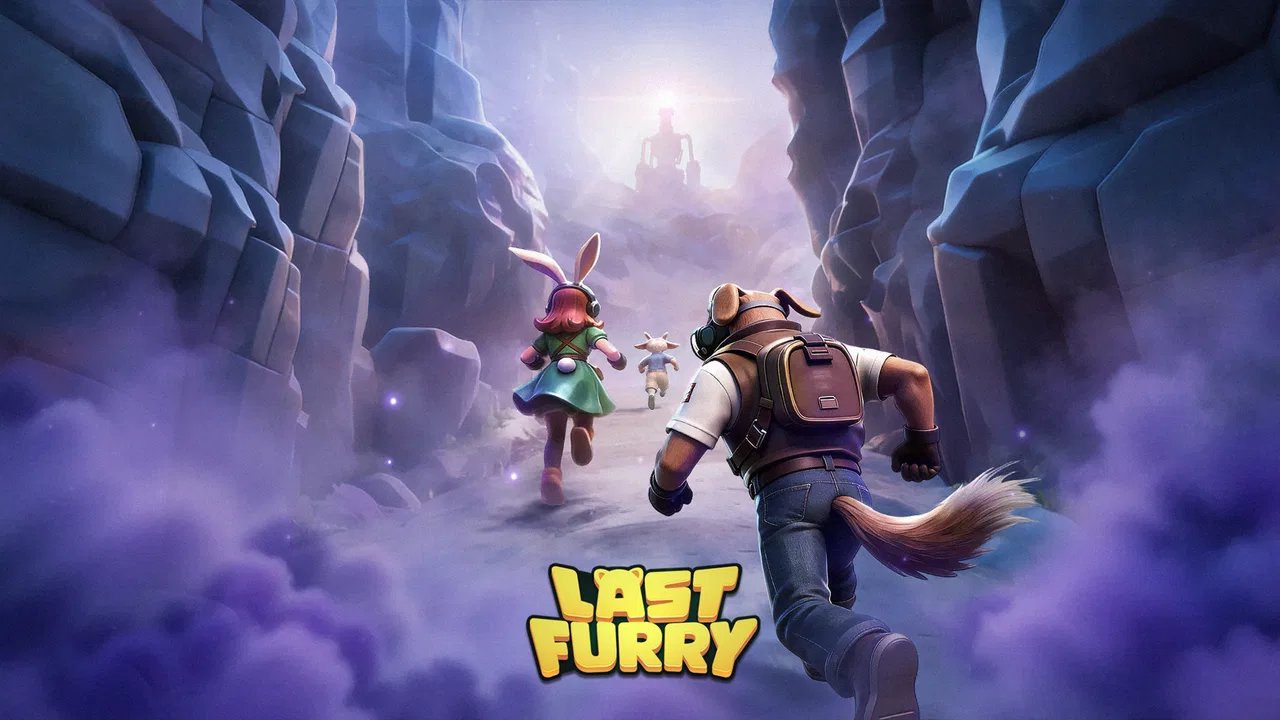
Last Furry: Survival
- 4.5
- Rating
- 1.00M
- Installs
- Free
- Price

 Analysis by App-foxy
Last Furry: Survival caught my attention because it takes a familiar strategy-game question and gives it a harsh environmental twist: how long can a settlement, team, or individual plan ahead when clean air is the resource that decides whether anyone gets another turn? I spent time with it as a mobile strategy game and found that its strongest quality is the pressure created by the toxic-fog setting. Every decision feels more urgent when breathing space is not simply part of the background but the condition for survival.
Developed by StarUnion, the game is free to start and aimed at a Teen audience. It has reached over a million installs and holds a 4.5 average from around twelve thousand ratings, which suggests that the central idea has connected with a sizeable mobile audience. That popularity did not make every part of the experience perfect for me, but it did make the game feel active rather than forgotten.
How the current version feels to play
The current release is version 2.0.0.1780293915, and I approached it as a strategy game first rather than as a quick arcade distraction. The main appeal is the need to think in terms of survival priorities. Clean air, safe movement, useful resources, and the timing of decisions all become connected. A choice that looks efficient in the short term can create trouble later if it leaves too little room for recovery.
You May Also Like

 Blood Strike: 2.5 Anniversary
Blood Strike’s Loadouts Turn Every Drop Into a Tactical Gamble
A close look at Blood Strike’s custom loadouts: how fast access to signature weapons reshapes its battle royale rhythm, rewards preparation, and narrows the gap between fights.

 Pandora - Music & Podcasts
Pandora’s Music Is Easy to Start, but Harder to Recover
Pandora’s strength is its low-effort path from a seed to a station. Its weak spot is how much confidence it asks you to place in connection, setup, and quiet recovery.

 8 Ball Pool
 Is Built on Rivalries, Rematches, and Routine
A close look at the rivalries, rematches, shared routines, and unanswered safety questions that turn a quick pool match into a persistent mobile community.

 Samsung Music
’s Quiet Strength Is Playing What You Already Own
Its reach comes less from spectacle than from dependable access to a personal library. That simplicity is both the app’s strongest retention engine and its ceiling.

 AccuWeather: Weather Radar
AccuWeather Review: A Quick, Clear Forecast for Everyday Decisions
For everyday plans, the best forecast is the one you can understand quickly. AccuWeather makes rain timing, radar, and local conditions easy to act on, with a few trade-offs.

 Hill Climb Racing
Why Hill Climb Racing Still Turns Crashes Into One More Run
A tiny car, a bumpy hill and one more upgrade: Hill Climb Racing keeps resurfacing because its simple chaos makes every near-miss feel personal.
More From Our News Desk



That structure gives the game a different rhythm from many mobile strategy alternatives. In a traditional base-building title, I can often expand aggressively and repair mistakes with enough time. Here, the atmosphere itself creates a reason to slow down and consider consequences. The setting encourages cautious planning, but it also creates moments when waiting is just as dangerous as acting.
I especially liked the way the premise changes how I read the screen. A fog-covered area is not merely decoration. It represents uncertainty and risk, so I naturally began checking the situation before committing to a move. This is a small but important design success: the theme influences my decisions instead of sitting separately from the mechanics.
The game is best enjoyed in focused sessions. I would not choose it when I want a completely relaxed experience that can be played without attention. Even if a session begins quietly, the survival framing makes me think about what I am spending, what I am protecting, and whether a convenient move will make the next stage harder.
Why the air-focused setting matters
Many strategy games use food, fuel, money, or territory as their main pressure point. Last Furry: Survival makes purified air the idea I keep returning to. That changes the emotional weight of ordinary decisions. A resource is no longer just something that helps me grow; it becomes tied to the ability to continue at all.
For me, the most interesting consequence is that efficiency is not always the same as progress. Saving everything can leave me underprepared, while spending too freely can remove the safety margin I need later. The useful habit is to treat every improvement as part of a larger survival plan rather than judging it only by its immediate benefit.
This also makes the game suitable for players who enjoy planning under pressure. If you like comparing options, anticipating setbacks, and learning from a failed attempt, the premise gives those habits a clear purpose. If you prefer strategy games where expansion is almost always rewarding, the environmental danger may feel restrictive instead of exciting.
What the second major version changes in the experience
The move to the current 2.0.0.1780293915 release is important context for anyone discovering the game now. I would treat it as the present form of the experience rather than assuming that impressions from an earlier build describe it completely. The version number signals a substantial stage in the product’s development, although the practical question for a new player is simpler: does the current loop hold attention?
In my experience, it does when I approach it as a game of controlled risk. The toxic-fog premise remains the feature that gives the title its identity, and the current build feels designed around that pressure rather than using it as a thin story wrapper. The result is a strategy game with a more survival-oriented mindset than a standard construction simulator.
Existing players should expect the current version to be the sensible starting point for judging the game today. Long-term players may notice that their earlier memories do not perfectly match the present balance or flow, especially in a title that has moved into a newer major version. I would avoid making decisions based only on old discussions or early impressions; the best assessment comes from seeing how the latest build handles its central survival loop.
At the same time, a new version does not automatically remove every source of friction. I still found that the game asks me to learn its priorities through experience. That can be satisfying once the logic becomes clear, but it may feel demanding during the first sessions, particularly for someone who expects a quick tutorial to explain every useful decision immediately.
Practical habits that make a difference
My first useful habit was to stop treating purified air as something to spend casually. I began asking whether an action improved my immediate position while weakening my ability to handle the next threat. That simple question helped me avoid the common mobile-strategy mistake of choosing the most visible upgrade rather than the most reliable one.
A second habit was to leave room for correction. When a game is built around a dangerous environment, a plan that works only if everything goes perfectly is usually too fragile. I found it better to keep a margin for an unexpected problem, even when that meant slower progress. This is not flashy, but it is exactly the kind of practical thinking the setting rewards.
Third, I recommend learning the cost of impatience. New players may want to push forward whenever an option becomes available, but the fog makes timing meaningful. Before committing, I check whether I have enough support to deal with the consequences. That pause often matters more than choosing the theoretically strongest option.
These are not shortcuts that remove the challenge. They are ways to understand what the game is asking from me. The title becomes more enjoyable once I accept that survival is not just about collecting more; it is about maintaining enough stability to keep making good choices.
A realistic everyday use case
Imagine opening the game during a commute with enough time for a concentrated session but not enough patience for a complicated multiplayer commitment. Last Furry: Survival fits that situation better than a long-form strategy game that demands constant attention across the day. I can enter with a specific goal, review the danger around me, make a few deliberate decisions, and stop after reaching a natural pause.
However, I would not recommend starting a difficult run while distracted. If I am answering messages or moving between tasks, I am more likely to spend resources without thinking through the next step. The game benefits from short periods of attention rather than mindless tapping. For a lunch break, evening wind-down, or waiting-room session, that can work well; for background play while doing something else, it is less convincing.
This is also where the game differs from simpler casual strategy options. Those games often let me make progress through repetition even when I am barely focused. Here, attention has more value. Players who enjoy that involvement will see it as a strength, while players looking for a low-effort time filler may find it unnecessarily demanding.
Who will enjoy it most
I would recommend it to someone who likes strategy games with a clear survival theme and meaningful trade-offs. It is a good fit if you enjoy learning through failed plans, managing limited safety margins, and making decisions that have consequences beyond the next screen. The toxic atmosphere also gives the game a stronger identity than many interchangeable mobile strategy releases.
It is particularly appealing to players who want a mobile game that asks for judgment rather than constant speed. The best moments come when I recognize that a modest, careful choice is better than a dramatic move. That feeling of avoiding disaster through preparation is more satisfying here than simply watching numbers rise.
I would be more cautious about recommending it to someone who wants a purely decorative settlement game, a very gentle introduction to strategy, or a predictable progression path. The survival premise means that setbacks are part of the experience. If losing progress or revising a plan feels frustrating rather than educational, the game may not provide the kind of relaxation you want.
Free entry, optional spending, and the real trade-off
The game is free, which makes it easy to try without committing money at the outset. It includes optional purchases ranging from $0.99 to $99.99 per item. I would approach those purchases carefully, especially during the early learning period. Spending before understanding the game’s priorities can solve an immediate annoyance without solving the underlying planning problem.
For me, the sensible approach is to play long enough to decide whether the survival loop itself is enjoyable. If I like the decisions, the pressure, and the way the fog shapes my thinking, the free entry has already done its job. If I dislike those fundamentals, purchases are unlikely to turn the game into a different kind of strategy experience.
The presence of a wide purchase range also means that different players may experience progression differently depending on how much they choose to spend. I prefer to judge the game first on its decision-making rather than on the possibility of accelerating progress. Anyone who dislikes optional spending systems should set a firm personal limit before playing.
Where it still needs patience from the player
The biggest weakness for me is accessibility of understanding. The premise is immediately clear, but a clear premise is not the same as a fully transparent strategy system. I had to build my own sense of priorities by observing outcomes and reconsidering mistakes. Players who want every rule explained before making a meaningful choice may feel that the game leaves too much learning to experimentation.
The survival pressure can also become tiring if I play for too long without a change of pace. Constant concern about air and resources is effective in short and medium sessions, but it can feel heavy when I want a more forgiving experience. I recommend treating it as a game to return to rather than one that must occupy an entire evening.
Another limitation is that the theme may narrow its audience. The toxic-fog world is memorable, but it is also severe. Players who prefer colorful, optimistic strategy settings may not connect with the mood, even if they enjoy the underlying planning. In that case, a conventional city builder or lighter management game would probably be a better choice.
I also think the game asks the player to supply some of the motivation. The setting explains why survival matters, but the lasting appeal depends on whether I personally enjoy improving a plan after it goes wrong. If I need a strong narrative push or a large variety of unrelated activities, this focused survival structure may eventually feel too narrow.
How it compares with familiar strategy alternatives
Compared with a standard base builder, Last Furry: Survival feels less comfortable and more reactive. A typical builder encourages expansion, decoration, and steady accumulation. This game makes me think about whether expansion is safe at all. The difference is valuable when I want tension, but it also means I cannot play it with the same carefree rhythm.
Compared with a turn-based strategy title, it offers a more immediate environmental threat. Turn-based games often give me time to examine a battlefield and calculate a move in detail. Here, the survival framing makes the broader condition of the world feel just as important as any individual action. Players who prefer deep tactical combat may find other games richer, while players who enjoy resource pressure may find this more distinctive.
Compared with casual resource-management games, it demands more commitment from each choice. A casual alternative may be better for a few seconds of effortless interaction. Last Furry: Survival is better when I want to sit down and think about a chain of consequences. That distinction is more important than the free price, because the real question is not whether it costs money to begin but whether its style of attention matches my habits.
Questions I would consider before installing
If you are wondering whether it works on an older device, the listed minimum is Android 5.1. That makes the entry requirement relatively approachable for people who are not using a recent phone, although actual comfort can still depend on the device and the way it handles the game. I would keep expectations realistic rather than assuming every older handset will feel equally smooth.
If you are deciding whether the Teen rating suits your household, I would focus on the game’s survival atmosphere and the pressure of its toxic-fog setting. It is not presented as a purely child-oriented strategy experience. Parents should review the tone themselves and consider whether the environmental danger and optional purchases are appropriate for the player.
If you are already playing an earlier release, the current version is the one I would use for a fresh comparison. A major version change can affect pacing and balance, so I would give the new build enough time to show its intended rhythm instead of judging it after a single quick session. Returning players may need to rebuild habits that worked in an older version.
If you are worried about purchases, the free starting point lets you test the core appeal first. My advice is to decide whether you enjoy managing purified air, anticipating danger, and recovering from mistakes before considering any optional item. That keeps spending separate from the more important question of whether the game’s strategy loop suits you.
Finally, if you want a game for completely passive play, I would skip this one. It rewards attention, and its most interesting decisions lose their value when I tap through them without thinking. Choose it when you want a focused survival challenge, not when you simply need something moving in the background.
What I would watch as the game continues
The most important thing to watch is how StarUnion develops the balance between pressure and clarity. The toxic-fog concept is strong enough to carry the experience, but the game will remain approachable only if newcomers can understand why a decision succeeded or failed. Clearer learning would help the title keep its tension without making the first sessions feel unnecessarily opaque.
I would also pay attention to how future changes affect long-term variety. The central survival loop is distinctive, yet a focused loop needs enough reasons to revisit it. New players need a fair path into the game, while existing players need meaningful decisions that do not simply repeat the same opening routine.
For current users, the best approach is to judge the latest build on its own terms and keep a flexible strategy. Do not assume that a plan that worked before will always remain optimal. For new users, begin conservatively, learn what purified air means in practice, and resist the temptation to measure progress only by visible expansion.
My final view is positive but specific: Last Furry: Survival is worth trying if you want strategy shaped by environmental risk rather than comfortable growth. Its strongest feature is the way the toxic-fog premise changes ordinary planning into a question of survival. Its main weakness is that the game expects patience while you learn its priorities, and the persistent pressure will not suit everyone.
I would recommend starting free, playing with deliberate attention, and deciding based on the quality of the choices rather than the promise of faster progress. For me, the game succeeds when I am weighing safety against ambition and learning from a plan that failed. If that sounds like the kind of challenge you enjoy, this StarUnion release has a clear identity and enough tension to earn a place among mobile strategy games.
FAQs for Last Furry: Survival
01What is the main objective of Last Furry: Survival?
Last Furry: Survival is a thrilling adventure game where players step into the shoes of a furry protagonist surviving in a post-apocalyptic world. The main objective is to gather resources, build shelters, and fend off enemies while uncovering the mystery behind the world's downfall. Strategic thinking and quick reflexes are key to ensuring survival.
02Is Last Furry: Survival free to download and play?
The game is free to download on both Android and iOS platforms. However, it includes in-app purchases that provide additional resources, cosmetic items, and upgrades. While it's possible to enjoy the game without spending money, these purchases can enhance the gaming experience and help players progress more quickly.
03What are the system requirements for Last Furry: Survival?
For Android users, the game requires at least Android 8.0 and 2GB of RAM to run smoothly. iOS users will need iOS 12.0 or later. It's recommended to have a stable internet connection for optimal performance, especially for multiplayer modes. Ensure your device meets these requirements to avoid any gameplay disruptions.
04Does Last Furry: Survival offer multiplayer options?
Yes, Last Furry: Survival features an engaging multiplayer mode. Players can team up with friends or join clans to tackle challenges together. The multiplayer option enhances the survival experience by allowing strategic collaboration and resource sharing, making it easier to survive in the harsh game world.
05Are there regular updates for Last Furry: Survival?
The developers are committed to providing regular updates to enhance gameplay and introduce new features. These updates often include new levels, characters, and seasonal events. Users can expect bug fixes and performance improvements, ensuring that the game remains fresh and exciting over time.
Pros
- Engaging storyline with multiple endings.
- Diverse environments to explore.
- Customizable character avatars.
- Intuitive controls for smooth gameplay.
- Regular updates with new features.
Cons
- Occasional lag on older devices.
- In-app purchases can be pricey.
- Limited offline functionality.
- Advertisements can be intrusive.
- High battery consumption during play.

Last Furry: Survival
Gallery